
You might associate the word “overdraft” with fees. If you do, you’re right … and wrong. Overdraft protection is a service that, when used well, can give your accounts extra breathing room.
In this guide, we’ll walk you through the basics of overdraft protection, how overdraft fees work, and a few easy ways to keep your account working for you instead of against you.
Overdraft Protection and Fees at a Glance
- Overdraft protection can help you cover a purchase when your checking account is too low to pay for it. Think of it as a buffer zone for your account.
- When you use overdraft protection, you may be charged a fee when you spend more money than is in your account. (As of June 25, 2026, our overdraft fee is $24.94 per transaction; see our Fee Schedule for current terms and conditions.)
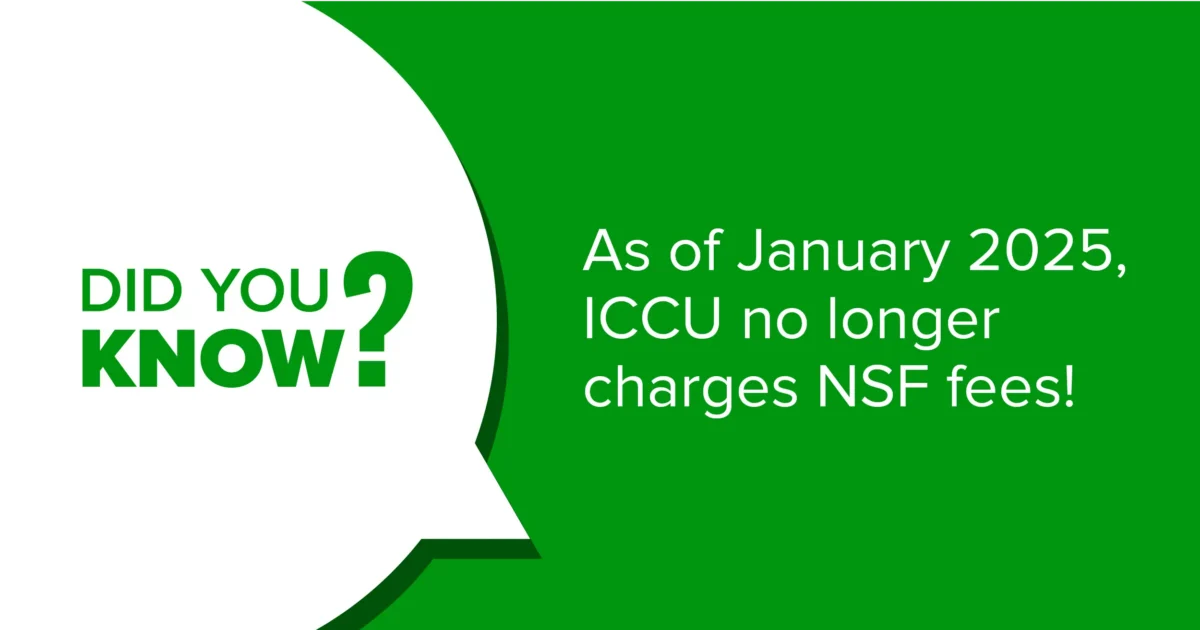
- Overdraft fees and non-sufficient funds (NSF) fees are different. As of 2025, ICCU does not charge NSF fees.
- You can usually opt in or out of overdraft protection, though it depends on the type of account.
- Avoid overdraft fees by staying aware of your account balance and keeping an extra cushion of funds whenever possible. Set alerts, watch transactions closely, and make sure your settings are structured the way that works best for you.
What Is Overdraft Protection?*
Overdraft protection can help you cover a transaction when your checking account balance comes up short. If a transaction hits your account before you have enough funds, your credit union or bank temporarily pays for the purchase so it doesn’t bounce.
Essentially, you still get to make your purchase. Soon after, you’ll pay your financial institution that money back, plus a fee. That’s why it helps to understand how the program works before you need it.
ICCU offers standard overdraft protection with most accounts. You may also hear overdraft protection called overdraft coverage, courtesy pay, or even bounce protection. The names vary, but the idea is the same: they help you cover certain transactions when your funds are low.
| Transaction Type | Standard Overdraft Program | Additional Overdraft Protection (Opt-In) |
|---|---|---|
| Personal Checks | Yes | Yes |
| ACH/Electronic | Yes | Yes |
| ATM Transactions | No | Yes |
| Debit Card | No | Yes |
What Are Overdraft Fees?
If you’ve opted into overdraft protection, you’re charged a fee whenever your transaction is paid despite insufficient funds. You’re charged every time you make an overdrawn transaction, not on a cyclical basis like a credit card.
Each credit union and bank does it differently, but at ICCU, overdraft fees are capped at five transactions a day so you’re not overrun with fees. We also offer other options that may cost less than standard overdraft coverage, like linking a savings account or line of credit to your checking account.
Overdraft vs. Non-Sufficient Funds (NSF) Fees
These fees are easy to mix up because they sound similar on paper. Depending on where you bank, you may be charged with an NSF fee if you try to make a debit card purchase without enough money in your account. The difference is that unlike overdraft protection, you’ll be charged the fee and your purchase will be declined.
Here’s the shortcut to deciphering the two: If the payment goes through, think overdraft. If it gets declined (but you’re still charged a fee), think NSF.
Can I Opt In or Out of Overdraft?
Yes. In many cases, you can choose how ICCU handles transactions that could overdraw your account. Members often make that choice when opening a checking account, but you can also update your overdraft if you change your mind later.
Keep in mind that not all transaction types work the same way. Consumer accounts, ATMs, and everyday debit card transactions generally require your permission before they can be covered through overdraft, while other transactions, like checks and ACH payments, may be handled differently depending on your account settings and eligibility.
If you want to review or change your overdraft options, contact ICCU at a branch, via VideoChat, or by phone. That gives you a chance to choose the setup that fits your banking style best. (Overdraft setting changes can take up to 24 hours to take effect.)
How Do I Avoid Overdraft Fees?
Avoid overdraft fees by staying a step ahead of your balance. A lot of overdraft surprises come down to timing, not just spending, so a little awareness can go a long way.
A few easy ways to say ahead of overdraft fees:
- Set up low-balance alerts so you know when your account hits the brink of your comfort zone. Alerts can give you time to transfer money or hold off on a purchase before your balance gets too low.
- Keep a small cushion in checking if you can. This will help you cover purchases if a deposit or transaction processes when you’re not expecting it.
- Watch recurring bills and automatic payments closely. ACH payments, subscriptions, and scheduled drafts sometimes post when you’re not thinking about them.
- Pay attention to pending transactions (not just posted ones). Your balance can take a little bit to update, so your balance might look higher than it actually is. If you bank at ICCU, be sure to reference your available balance.
- Consider linking a savings account or line of credit if you want a backup option. At ICCU, additional overdraft protection like a linked savings account or line of credit may be less expensive than standard overdraft coverage.
- Review your overdraft settings from time to time. If you’d rather have certain transactions declined than paid with a fee, it may be worth revisiting the way your account is set up.
- For ICCU members, overdraft fees are assessed at the end of the day, not the moment a transaction first puts your account in the negative. That means if you bring your balance back up before the end-of-day cutoff, you may be able to avoid a fee. ICCU also does not charge an overdraft fee if your account is overdrawn by $5.00 or less at the end of the day.
Bank with Confidence
The more you understand overdraft protection, the easier it becomes to make it work for you. Knowing when fees can happen, how to stay ahead of your balance, and when to review your account settings can help you avoid surprises and make smarter day-to-day decisions.
If you’re not sure how your account is currently set up or you want to explore other overdraft options, ICCU can help you review what makes the most sense for your banking habits.